Monday, September 9, 2013

What You Can Do About Syria

It all seems so hopeless. If you know anything about the civil war in Syria, you know there really isn't a good scenario on the horizon. Syria is a diverse country with various religions and sects: Sunni, Shia, Alawi, Orthodox, Catholic, Druze. The brutal dictatorship of Bashar Al Assad and his military crackdown have killed hundreds of thousands. Among his diverse collection of enemies are radical Muslims linked to Al Qaida. Regardless of who wins, someone will not be happy, the bloodshed will not likely end.

As our elected officials contemplate a military strike against the government of Syria thousands of Syrian refugees pour into Lebanon, Jordan, Turkey, and other nations, living in tents, often malnourished and suffering from disease. It's been called the worst humanitarian crisis since Rawanda. Over two million Syrians have already fled their country; half are children.


What can a Christ-follower do against such prevailing gloom? It seems we have no voice in our own government's actions, let alone what happens on the other side of the world. What can we possibly do to help such a complex crisis in Syria? 

We are not without hope. Here are the three things every Christian can do today to help Syrians, to combat the tragedy, to push back against the kingdom of darkness.


1. Pray for Peace

1 Tim 2:1-2 tells us to pray for those in authority, that we might live peaceful lives. Let's flood the heavens with prayers for our American leaders, that they would pursue policies that lead to peace and not an escalation of the war. Pray for the leaders of Syria, including the leaders of rebel groups that they would be moved to come to the negotiating table. Pray they will seek to minimize civilian deaths in he conflict. Pray for world leaders who may have a hand through diplomacy and other means to influence Syria for the cause of peace. Pray that the effects of their actions will lead to quiet peaceful lives for Syrians.

Prayer works. Calling on our sovereign and loving God to act changes things. Pray expecting God to change the situation in Syria in ways we could never imagine to bring good we could never bring.

2. Pray For Those Who Suffer
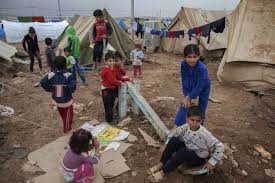
Thousands have lost homes and businesses in Syria. Hundreds of thousands have lost their lives. Millions are displaced. Suffering abounds in every way imaginable. 

We pray to align our hearts to God's. God's heart is moved to the widows, the orphans, the foreigners. He cares about what is going on in Syria and among the 2 million refugees.  Prayer will move God's hand, but it will also move ours, leading us to action, to help those in need

3. Help Those Who Suffer

‘Truly I tell you, whatever you did for one of the least of these brothers and sisters of mine, you did for me.’ Jesus tells us (Matt 25:40). You will be hard pressed to find more hungry, thirsty, naked strangers than in the refugee camps surrounding Syria. While most of us are unable to make the trip to Jordan or Turkey to physically give food and clothes, we can use a small portion of the wealth God has given us to help those who can.


I did a little digging for you. Here are some reputable organizations already working to help Syrian refugees in nearby countries and links to giving online to their work in and around Syria.

Save the Children is a reputable nonreligious aid organization. 89% of funds raised go directly to providing food and shelter for children and families.

UNICEF is a worldwide organization that has a mission to help kids. In addition to basic needs like food and medical care, UNICEF helps provide counseling and education for refugee children.

Samaritan's Purse is an organization that aids those in need in the name of Jesus.  They partner with local organizations and people in some of the most difficult parts of the world. At least 90% of every dollar given goes directly to providing for the needs of refugees.

Tuesday, August 27, 2013

Because We Can


We Need to Help

I was at Walmart with my oldest daughter, Elie on a Saturday afternoon. Near the stoplight as we were leaving, we saw a man and woman in old clothes standing together. The man held a cardboard sign, "Homeless, anything helps." We've all seen these people, and I have occasionally stopped and talked to people like this giving money or other forms of assistance. But most of the time I drive by without any urgency to help. "The poor you will always have with you," after all. It's not like I don't give any money to my church and other organizations that help the poor. I even volunteer at a homeless mission. I've done my part, it's someone else's job to help these people.  Plus they usually just want money, and I generally don't like just giving people money. That seems to foster dependence and encourages people to beg. And who knows if they are really telling the truth. they are probably just going to use the money to buy liquor or something worse.

As I drove past them and turned onto the road, my mind had quickly justified itself and had moved on to other matters. Suddenly Elie yelled out, "We need to go help those people! We have to turn around." I gritted my teeth, and not wanting to squash the generous spirit of my daughter, reluctantly turned around, and went back.

We got out of the car and went up to  talk with them. the man told me his story, and it was very believable. I could even see the car with blankets pulled out where they had been sleeping. While the shelters in our town were full, he knew of a place an hour away he could stay if he could just get some money for gas. Fortunately, there was a gas station right next to us, so I had him pull his car up and we put enough gas in it to get him where he was headed. Elie and I prayed with them and sent them on their way.

OK, so that's one point for Elie. But while she served as a voice of conscious (or conduit of the Holy Spirit), she didn't have a big role to play. It's not like she payed for the gas.

Give it All

The next day, Elie brought home a pledge form for a fundraiser the kids were doing at church. They were raising money to dig a well in a part of India, where the people don't have clean drinking water. She asked us how much money we wanted to pledge. As I though about it a minute, fully planning to pledge some money, I felt God say to ask her the same thing. "How much money will you give to the people  who need clean water.?" I asked her.

A little background. Elie gets an allowance, 50¢ each week. Megan and I have never mentioned tithing to our kids. We just tell them God wants us to give generously to Him to help others and let them decide how much to give. From this allowance, Elie and her brother and sister have been saving up together to get a weasel ball they see at the toy store at the mall every time we pass by. This week they would have enough for the $10 toy.

So when I asked the question, I thought she would maybe give a dollar or so. Elie thought really carefully for a minute. "I want to give it all."


Weazel Ball


Did I hear her right? Megan and I questioned her to make sure she knew what she was doing. "I can save my money again and get a weasel ball anytime," she told us. "But those kids need water to drink and I can help."

The point of this tale is not just to brag on my daughter (which I could do all day), but to highlight the attitude of generosity so lacking in myself. I wonder if some of you are like me? We are generous when it is convenient. We are generous with our surplus. We do enough good to look like good people, but not to get carried away with it.

Because We Can

Proverbs 3:27 reminds us, "Do not withhold good from those to who it is due when it is in your power to act." Doing good things is not just for times of convenience. it is for every time we are able, every time we have the power to do it.

When I look at Jesus, I don't see someone who casually did good for others. He lived every moment to do good. Even when he tried to withdraw for some much needed rest and solitude, he could not keep himself from having compassion on the crowds, spending an entire day with them, teaching them, healing them, feeding them (Matt 14).

Jesus redeemed us to make a people, "eager to do good works." (Titus 2:14)  So, if I am trying to follow Jesus I will be moved from casual good works to an urgency to help others.

A lot of people trying to justifying moderation in giving say "you can't help everyone." And they're right. But we can help a lot of people. I suspect that every one of you reading this, like me are among the richest 25% of the world's population. While American society might not consider you rich, you have all your needs met as well as some disposable income.

As we move together toward following Jesus, I challenge you to join me as I examine my life, my money, my time to see how I can best use what I have been given to serve those in need. What can we do to help others? I think this is what Jesus is calling us to, to do no more and no less than whatever we can.

Tuesday, August 20, 2013

An Open Letter to my Traditional/ Evangelical/Conservative Christian Friends

Dear Christians who are more traditional, evangelical, and generally less flaky than me,

After I wrote my last letter, I thought a lot about you. While you were applauding me for sticking it to those other guys, I hope you don't think I just wrote it for them.  Even though I have a strong respect for you and your beliefs, some of the things you do and say really worry me.  I want to share a few things with you as well, some friendly advice to help us get along better as brothers and sisters in Christ.

Stop making me feel uncomfortable to disagree with you about stuff.  I often feel uncomfortable around you, and I agree with you about a lot of things. Imagine how uncomfortable the average unbeliever would feel when you start talking. You are not winning anyone to Christ by ridiculing the politicians, or airing your opinions about immigration or healthcare. What do these have to do with the Gospel? You are creating barriers. Learn what is important in life (knowing Jesus, loving God and others) and spend your time and effort on that. Also work to create an environment where people feel free to ask difficult questions and share unorthodox views without being ostracized (see the next point). It is also helpful to keep some of your opinions to yourself, especially around people you don't know very well.

You don't understand everything about the Bible. Quit pretending you do. It makes you come off as arrogant. You may, to some degree, understand your system of interpreting the Bible. You may even be right about several things. More than likely you are wrong about some things too. It's OK if your interpretation is  wrong, because your interpretation is not God's Word. Don't say things like, "The Bible says 'Christians are going to be raptured before/after/in the middle of the great tribulation.'" Say, "this is what I think the Bible is saying about this topic." Realize that just because other people disagree with your interpretation, does not mean they do not respect the Bible, or that they hate God.

Learn to Learn. A lot of people accuse you of being uneducated masses, that only a simpleton could believe and follow the Bible, that you only hold your beliefs because you have never been exposed to anything else. This, of course, is not true. I have known many very intelligent people who believe as you do. But you kind of have a reputation for saying things like "everything I need to know is in the Bible," even though the Bible does not say that (Psalm 143:5, Prov 18:15, 1 Thess 5:21). So read more, and not just pop-evangelical authors, like Max Lucado or John Piper. Read classics. Read contemporary works. Read fiction. You can learn a lot about people from the stories they tell. Read poetry. Listen to music. Learn about other cultures. Accept that you do not know everything about everything. Realize you can even learn things from people who disagree with you.

Stick to your guns. That is, if you have picked the right guns. "The weapons we fight with are not the weapons of the world." (2 Corinthians 10:4). At the end of the day you can read and listen to a host of voices. It will make you a more rounded person. It will make you an effective communicator. It may even change your mind about some of your deeply held opinions. But it does not change what is True. If you believe people who don't know Jesus will go to hell, then don't stop talking about it just because it's unpopular. That just makes you a jerk who cares more about what people think of you than saving someone's life. Sift out the bad, but hold on to the Good. Your job is not to become more like the trendy, open-minded, progressive Christians. It is to become more like Jesus. Make that your aim and you will do well.

Your bro,
Zach

Friday, August 16, 2013

An Open Letter to My Enlightened/Progressive/Open-Minded Christian Friends

Dear Christians who are smarter, hipper, and more open-minded than I am,

I ran across this article in the Huffington Post a couple weeks ago, from a self proclaimed Christian telling other Christians to shut up and play nice with everyone else. I agreed with a couple of things he said, but found most of it really irritating. I hear this kind of thing from a growing number of voices, many of them are people that I genuinely like and consider my brothers and sisters. We can not deny that there is a growing divide between those of you who fancy yourselves open minded, progressive, or enlightened Christians (even though you'd never say it like that), and those who call themselves Biblical, evangelical, or "true " Christians (and they would say it that way). What worries me the most, and what prompted me to write this letter is the fear that many of your type of Jesus-followers actually feel they have more in common with progressive atheists and secular types than with other Jesus-followers who hold different political perspectives or different interpretations of the Bible.

I'm sorry the rest of us have been embarrassing you so much. That is not our intent. But we are a family, and everyone has family members they are embarrassed of. We love them anyway. I agree that a lot of Christians need to be a lot less vocal about a lot of things.  It is so easy to get distracted about what the main thing is. Our job is not to influence public opinion or voting habits. It is not to create a "Christian nation" or a "moral majority."  Our job is to proclaim the kingdom of God and work to see it come "on earth as it is in heaven." Our job is to serve without recognition and love without reward, to live like Jesus. That is what will change the world. Keep reminding us of that.

Now I'd like to respectfully offer some advice.

Let the people you disagree with have a voice. There is a difference between shoving something down peoples throats and humbly affirming a truth you hold. Despite our high ideal of free speech, society has a tendency to shut out voices that do not conform to the norms. Often, I feel like certain Christians want to shut out the voices of certain other Christians whom they feel are giving the word "Christian" a bad name. It happens on both sides of the divide. I don't think that is a healthy way to approach our differences. When we can no longer come together in respectful dialog, we just deepen the divide that separates us. We also prove that we do not have the love of the Father in us.

Respect faith, even if (and maybe especially if) you don't believe the same thing. I think you often misunderstand what faith is. Faith is believing in something that can not be proven or falsified. So ridiculing someone's faith because it can not be proven just shows your own ignorance. Now, a lot of Christian types put their faith in a lot of different things, not all of them are right or helpful. But please stop criticizing them for having faith. If, for example, someone believes that the Bible is infallible and inerrant, they are not giving a scientifically verifiable statement, they are sharing a tenant of their faith. There are reasons people hold this view derived both from the text of the Bible, and the history of its transmission. Agree or disagree, you can not deny that it's a tenable statement of someone's deeply held belief. Similar things could be said about other beliefs you don't agree with, such as: six day creation, substitutionary atonement, and eternal conscious torment in hell. Remember that there are those who would ridicule your faith as well, just because they don't get it. Faith is a difficult thing to keep a hold of. Give some props to those do.

Stop worrying about what is popular or trending. Right now it is becoming more and more popular to affirm homosexual marriage and deny homosexual acts as sin. Popular opinion should have absolutely nothing to do with whether or not you support gay marriage. For too many it does. As followers of Jesus, our motivations should be how to best reflect God's holiness, goodness, and love in society and in our lives. If that motivation leads you to affirm gay marriage, then good for you. But don't talk about society changing and us needing to change with it. Don't talk about being progressive or open minded. Don't remind us that we are living in the 21st century. You are not winning any conservative types to your cause when you do. Talk about being Christ-like. That's an ideal we can agree on even if we disagree on some of the details about how we apply that today.

It's not all about love. I hear a lot of talk about love these days. I like to talk about love a lot myself. It's the part of the gospel that non-believers like to hear about. It sounds nice, at least until you try and live it out. In truth, the love we are taught by Jesus is so radically higher than anything we see or experience that we need to spend a huge amount of our time figuring out what it means and even more time trying to do it. However, reducing the whole of the Bible's teaching to "love" is like reducing the plot of "Inception" to "it's about dreams." The message of the Gospel is far too complex to reduce to a single unifying principle. I kind of like it that way. I reminds me that God is a lot bigger and more complex than we are. If God were easy to figure out, he wouldn't be God.

It is a lot about love. So let's work on loving each other. The love taught by Jesus is revolutionary. It brings together enemies. It breaks down the barriers of nationality, race, economic status, gender, and political ideology. I think the love of Jesus could break down the barriers between different kinds of Christians as well.  Well, it's a long shot, but I think it's a really good place to start.

I love you. Let's be friends.

Your bro,
Zach

Monday, August 5, 2013

Friday Afternoon at the Garden

I am writing this post from Dearborn MI, my hopefully soon-to-be home.

Williamson Street Community Garden lies just two blocks from the world famous Shatila Bakery. If you like baklava or other Middle Eastern sweets, you have to visit Shatila. Most of the residents in the area hail from Palestine, Iraq, or elsewhere in the Middle East.

We pulled up to the alley entrance of the garden with a load of supplies, everything you need to finish a wooden bench and secure a wooden rack for two compost barrels.

As we were unloading the car, an old Arab man from two houses down smiled and waved at us. He showed us a couple of big tomatoes from his own garden. We didn't have any ripe tomatoes yet. A few minutes later, he stopped by to chat with us for a bit.

The kids started coming after about 15 minutes. First one or two, and soon seven or eight, ranging from ages 3 to 10 or so. Shaddy, the 18 or 19 old brother of a couple of the kids came across the street and stayed a while.  He made plans with my companions about going together to a police auction the next day. He was hoping to score a motorcycle.

Shaddy left and one of my coworkers got out the trash picker sticks. The kids started getting excited as kids often do. He had been keeping them in suspense for a few days with a promise that they could use the trash pickers around their neighborhood.

The kids took off with the trash pickers They returned a few minutes later to get a bag to actually put the trash in. Then they went up and down the street picking up trash. They made an impromptu game of it, assigning point values to pieces of trash based us size and uniqueness. The fast food napkin was worth one point. The coke bottle was worth about five points. The rusty muffler that had fallen off of a car, twenty.

After the job was done and the trash pickers put away the kids just stayed. This was their place. They felt safe and comfortable with us. We played with them, giving them piggy back rides and racing each other with kids on our back. Brown skin rubbing against white skin, shrieks, giggles, lots of smiles.

As we worked at the garden several other neighbors stopped by or greeted us as they passed. A mere three months ago, the city gave our fledgling organization, Neighborhood Growth Initiatives, permission to put up our first community garden on this empty lot. A lot has happened in that time.

We got a grant to place 40 raised garden beds. Most of them are tended by individual members of the neighborhood, with a few community plots open to all. They are all full of vegetables, several ripening.

Neighborhood gardens are about a lot more than just food. They create a sense of community. They bring people together. Many of the neighbors are from different nationalities and may not actually know each other. How many of your neighbors do you know? Neighborhood gardens get people out and meeting their neighbors. That reduces crime. It eases ethnic tensions. It makes the streets safer for kids.

A lady  with a black and white polka dot hijab (head scarf) called us over as she was about to get into her car. She handed us a small wad of cash. "I really want to help you guys out." She said. "You are doing good work here... really good work."

We plant vegetables and hope. Jesus said he came to bring "good news to the poor." (Luke 4:18). We can't fix the worlds problems, but we can bring something good to a neighborhood, maybe even a city. When we do we aren't just doing some humanitarian good deed. Our work goes beyond meeting a temporal need. We are following Jesus, working in his name, and bringing a hope that glistens with eternity.

Wednesday, July 24, 2013

3 Common Misconceptions About Following Jesus

So many of the things we believe, are things we don't even think about. We pick them up in our earliest years from our parents, teachers, friends, and the culture at large. Some of them are things deliberately taught, values passed down from the previous generation, like the idea that all people should be treated equally. Others are so ingrained into our culture that we never question them, like the superiority of sliced bread to unsliced.

We have picked up a lot of subtle beliefs about Jesus as well, and what he asks of us. Some of them are wrong, contrary to the Gospel. Often, these misconceptions go untested.

1. Following Jesus is a Religious Thing

So what do you think of Jesus?”
I go to church and all that”

Jesus never asked anyone to go to church. His call was simply “follow me.”

The words “religion” and “religious” are only found ten times in the NIV Bible. Most of those clearly refer to the Jewish religion (Amos 5:21, Acts 25:19, Colossians 2:16, and Hebrews 10:11) and many of those show “religion” in a negative light, sometimes directly opposed to God.

Jesus was a member of the Jewish faith. He remained so all his life, faithfully keeping the Law, showing that it was meant to point to himself. But most of the things Jesus talked about had little to do with his religion, other than a general faith in God. Jesus spent a lot of time telling people about the kingdom of God. He talked about loving others, neighbors, enemies, anyone. He talked about how we spend our money, how we treat our children, how we make peace with others. He talked about prayer and fasting, but he specifically criticized those who made a religious show of them. He taught us that prayer and fasting are primarily something between ourselves and God.

Jesus never talked about church buildings, programs, services, pews, or ceremonies. He never told people to be priests, or ministers. He never commanded people tithe to their church. Jesus never discussed forms of worship, and whether we should be contemporary, traditional, or liturgical.

Jesus did not come to earth to start a new religion called Christianity. He came to bring people to God. Following Jesus is not about religion. It is not about promoting religion, or trying to get people to join our particular brand of Christianity. Following Jesus is living life in away that brings people closer to God, wherever they may be on that journey.

2. Following Jesus is a Personal Thing

I can just worship God in my truck or on the lake.”

One of the distinctives of American culture is our “rugged individualism,” our determination to make it on our own, not influenced, not dependent on others. Our cultural axioms include: “Be your own man,” “Follow your dream,” and “Do it your way.” We have a tendency to read this into the Bible as well.

Jesus never intended us to go at it alone. Faith is a deeply personal thing, but it is also a deeply communal thing. I can not love my neighbor without a neighbor. I can not encourage others if I don't talk to them. I can not confess my sins to others and pray for them (James 5:16) all by myself.

Much of the New Testament is composed of letters written to specific churches. By churches, I do not mean 501(c)3 organizations that meet in a building with pews and stained glass. Rather, the New Testament word “church” simply means “group.” It was written to groups of people together. People who were often diverse, but shared a common connection as disciples of Jesus.

Anytime in my life that I have been growing as a disciple. Anytime I have deepened my understanding of God and the world. Anytime I have become more like Jesus, It was in the context of a group of people encouraging me, teaching me, caring for me. And it almost always happened as I was doing the same thing back to them.

3. Following Jesus is an Easy Thing

I asked Jesus into my heart once. Did you see my new truck?”

I am not here to judge an individual's temporal or eternal relationship with God. I can say this with certainty, following Jesus is not about praying a prayer, believing a doctrine, or even getting baptized (although those are all often involved in a decision to follow Jesus). Following Jesus is about living life like Jesus. It is saying, “Jesus knows more than me, I am going to trust him and do things his way.” This is not an easy thing to do.

Jesus said it like this,
“Or suppose a king is about to go to war against another king. Won’t he first sit down and consider whether he is able with ten thousand men to oppose the one coming against him with twenty thousand? If he is not able, he will send a delegation while the other is still a long way off and will ask for terms of peace. In the same way, those of you who do not give up everything you have cannot be my disciples.” (Luke 14:31-33)

So if you want to follow Jesus, to be his disciple, it will cost you everything. Don't do it unless you are ready for trouble.

Here is what I have experienced. Sometimes following Jesus means bucking the trends of society. Society does not always get it right. Sometimes following Jesus means bucking the trends in the church. The church doesn't always get it right either. You will get persecution from all sides. You will be too liberal for your conservative friends, too conservative for your liberal friends. If your highest aim is for people to like you, following Jesus might not be for you.

So why follow Jesus? I do it for the rewards. I am not altruistic. I am not a good enough person to just love everyone for their own sake. But I trust that when I do love people, when I do it like Jesus , it will be worth it.

“Truly I tell you,” Jesus said to them, “no one who has left home or wife or brothers or sisters or parents or children for the sake of the kingdom of God will fail to receive many times as much in this age, and in the age to come eternal life.”

For every thing I have given up, for every criticism I have endured, I have received a multitude of blessings. I have always been provided for physically. I have witnessed God transform lives. I have seen enemies embrace. I have seen neighborhoods rebuilt. I have an ever increasing family in this life. I have a lot to look forward to in the next.

Friday, July 12, 2013

These Are Our Children


The facts are staggering. Every year more than a million kids are trafficked for sexual exploitation and forced labor around the world.  Across the world, children are  subjected to rape multiple times every night. They are subject to beatings, abuse, and sexually transmitted diseases. They are afraid. They feel helpless. They feel unloved.

Victims of sexual trafficking often remain in the sex industry even after they become physically free to do so. It is the only work they know. It is the only value they have been shown. The slavery never really ends.

I knew trafficking was a problem. But it isn't something I really like to think about. When I decided to open my eyes to the problem, I found I didn't even know the half of it. Here's some things that shocked me.

 - It's not just girls. Although young girls may be the picture we often have in our minds for sexual trafficking, an estimated 400,000 boys and young men are victims of sex trafficking each year.
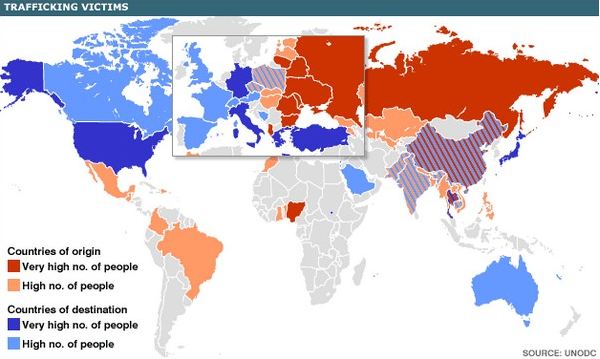
 - It doesn't just happen in some third-world country out there. An estimated 100,000 children in the U.S. are involved in the sex industry. The U.S. is the second largest destination for human trafficking in all its forms.
- It's big business. Human trafficking is the second largest criminal industry (after the drug trade) and brings and estimated $32 billion each year.

So I know what you might be thinking. I've never trafficked anyone. I've never participated in child prostitution or child pornography. Maybe I should think about donating money to an organization that fights trafficking, but really, this isn't my problem.

Business needs a supply and a demand to grow. The supply for child sex trafficking comes from poor vulnerable people in some of the poorest neighborhoods and the least developed countries of the world. But the demand - that comes from us. The demand for sex trafficking does not begin with a pimp on a seedy street corner. It does not begin with a creepy guy in a trench coat. The demand begins when people are looked on as something less than a bearer of the image of God. It happens when we objectify a person.

We objectify a person when we look at them for what they can give us. This can happen in a lot of ways, and not all of them are sexual. Most of us wold agree that  in viewing pornography, we objectify a person. But we can do the same thing by the way we look at someone who passes us on the street. There was a reason Jesus warned against looking at a woman with lust (Matt 5:28). It wasn't just some prudish, archaic rule to keep us in line.

Lust and pornography are not victim-less crimes. When we devalue one human being to an object, we devalue every human being. So what starts as an "innocent" second glance progresses to an obsession with fulfilling our desires at someone else's expense. It will hurt our relationships. Eventually, without any checks, it can lead to such an objectification that we would harm another person, even an innocent child to fulfill our desires. We like to think we are insulated from such evil, but it is not as far as we might think.

The bottom line is that we are all responsible for child sex trafficking. We are responsible by what we do. We are responsible by what we don't do. We are responsible by what we choose to ignore.

Photo: Roses are red,
Violets are blue,
We are safe,
Because of you!!!

This is the sweet face of one of the little girls in a Rapha House prevention program.  Every day, teams of RH social workers are dispersed into high risk trafficking communities. We reach out to children and families in these communities with education about trafficking as well as physical services.  We have a responsibility, not only to minister to child victims in our safe house programs, but also to stop trafficking from taking place before children are victimized.  

This Valentines Day, we want to say thank you for showing love to the children of Rapha House.  None of this is possible without you!

Photo by Theara- RH Kid's Club DirectorThese are our children. They are not nameless faces on a street. They are boys and girls created in the image of God. Each has a name. Each has a story.

These are our children. This isn't a problem some other people have in some other part of the world. We can't pretend we don't know it is happening, both in America and around the world.

These are our children. We live in the wealthiest nation on earth. We have power and resources to stamp out human trafficking. We are not helpless to come to their aide. We are just unwilling to get our hands dirty.

These are our children. Our sons and daughters are just a step away from slavery, when we allow them to be viewed as objects. When we objectify another human being, we are adding fuel to the growing inferno that is human trafficking.

These are our children. Every girl you look at online is someone's daughter. The ad revenue alone from visits to such sites fuels the pornography industry, creating a demand, making it more likely that another life will be destroyed by trafficking.

These are our children. Because it is not right to deny justice to the innocent (Provebs 18:5). Because God defends the cause of the fatherless (Duet 10:18). Because Jesus was compassionate to the helpless (Matt 9:36). Because our highest act of worship is to look after widows and orphans in their distress (James 1:27)

If God has so moved you, please consider joining the cause of rescuing children from sex trafficking. For more information, visit raphahouse.org and blackboxinternational.org


Stats courtesy of: http://abolitionmedia.org/about-us/modern-slavery-statistics and blackboxinternational.org